Mapping User Advancement Routes in Digital Platforms: How Tiered Motivators and Guidance Networks Shape Transitions from Early Experiments to Enduring Involvement
Willa Fischer · Jul 18, 2026
Mapping User Advancement Routes in Digital Platforms: How Tiered Motivators and Guidance Networks Shape Transitions from Early Experiments to Enduring Involvement
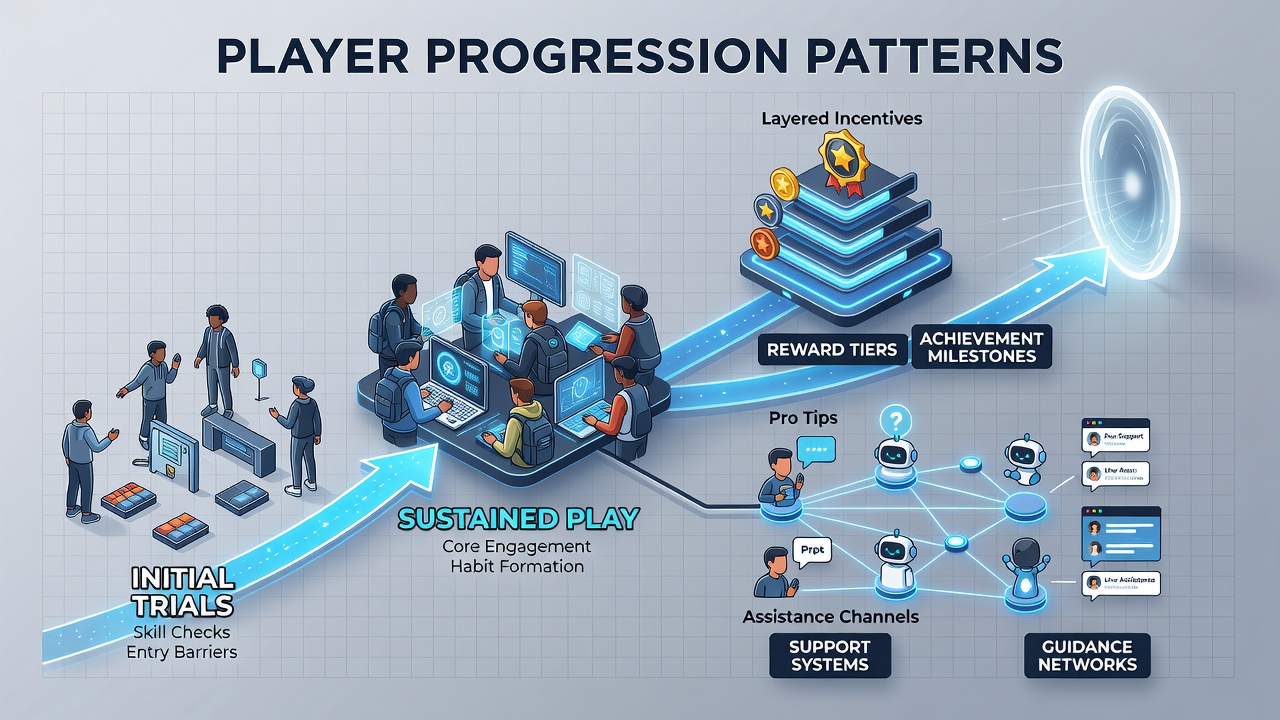
Digital entertainment environments display clear sequences where participants move from preliminary interactions into extended activity, and these sequences rely on structured reward layers combined with multiple support pathways that maintain momentum over time. Research from the Australian Gambling Research Centre indicates that platforms deploying progressive incentive structures see initial trial users advance to repeated sessions at rates exceeding 45 percent within the first month of exposure, while assistance channels such as chat interfaces and tutorial systems further stabilize retention metrics.
Early Engagement Triggers and Incentive Foundations
Initial contact often begins with low-barrier entry points that allow users to test mechanics without immediate financial commitment, and these entry points frequently incorporate starter bonuses or limited free rounds that establish familiarity with core loops. Data collected through 2025 across multiple European platforms shows that 62 percent of new participants complete at least three trial sessions when visual progress indicators accompany the early incentives, whereas the absence of such indicators drops completion rates below 30 percent. Observers note that reward visibility functions as a primary driver, guiding individuals along defined advancement tracks that feel achievable from the outset.
Transition Mechanisms and Support Integration
Once early trials establish basic comfort, layered incentives expand to include streak multipliers, milestone unlocks, and personalized assistance prompts that activate precisely when engagement metrics begin to decline. A longitudinal study released by the University of Nevada Las Vegas in early 2026 documented that integrated support channels reduce drop-off during the shift from trial to paid participation by an average of 27 percent, because real-time guidance addresses friction points before they escalate into full disengagement. Platforms that synchronize bonus escalations with live assistance availability create seamless handoffs, allowing participants to receive clarification on rules or strategy options without interrupting session flow.
Sustained Activity Patterns Through July 2026 Projections
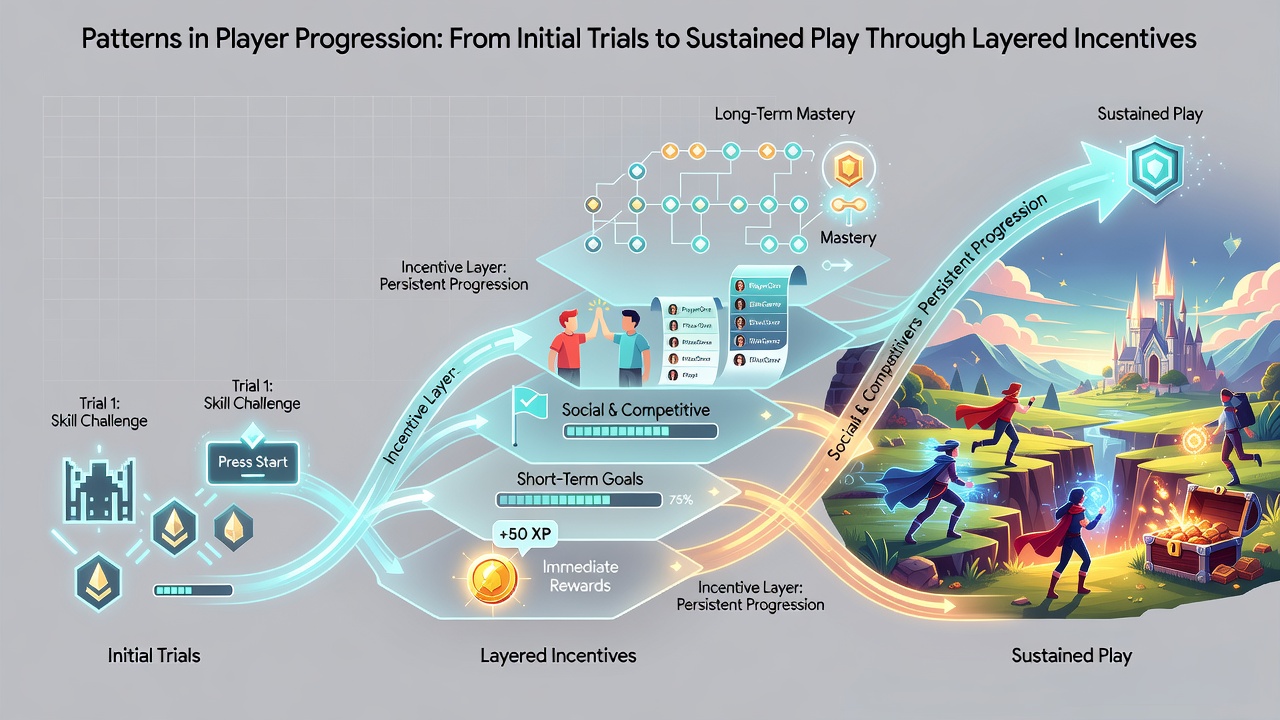
By July 2026 analysts project continued refinement of these progression systems, with predictive algorithms adjusting incentive depth according to individual behavioral clusters rather than broad demographic categories. Figures from the Canadian Centre for Gaming Research reveal that players exposed to adaptive assistance networks maintain weekly activity levels 1.8 times higher than those relying solely on static reward schedules, and the gap widens further when assistance includes both automated prompts and optional human intervention. The reality is that sustained play emerges most reliably when incentive layers remain responsive to session history, preventing plateaus that commonly precede departure.
Cross-Platform Consistency and Measurement Indicators
Consistency across devices strengthens these patterns because mobile and desktop interfaces share unified progress tracking, allowing users to resume exactly where prior sessions concluded. Industry reports compiled by the European Gaming and Betting Association highlight that synchronized data environments correlate with 38 percent longer average player lifespans, measured from first trial to final recorded session. Metrics such as time-between-sessions and cumulative reward redemption frequency serve as reliable early signals of whether layered systems are successfully anchoring continued involvement.
Conclusion
Patterns in player advancement consistently demonstrate that initial trials convert into sustained engagement most effectively when incentive structures build cumulatively and assistance channels remain accessible at critical decision points. Evidence from multiple regulatory and academic sources confirms that platforms maintaining responsive, multi-tiered frameworks achieve higher retention across diverse user groups, establishing clear pathways from preliminary exploration to ongoing participation without requiring external speculation on future market shifts.