Analyzing Volatility Dynamics in Sequential Reel Systems for Mobile Gaming Platforms
Dana Bennett · Aug 8, 2026
Analyzing Volatility Dynamics in Sequential Reel Systems for Mobile Gaming Platforms
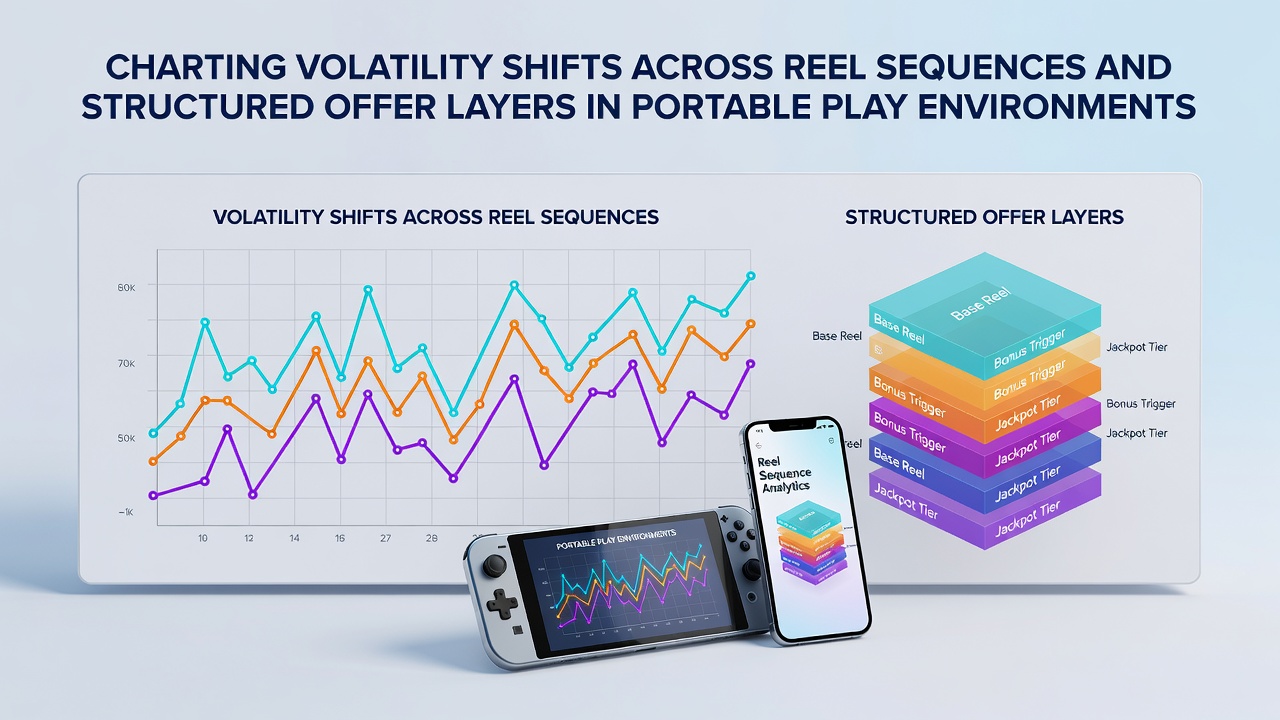
Volatility in reel sequences refers to the statistical variation in payout frequencies and sizes across consecutive spins in digital slot environments, and portable play platforms have introduced new layers of data collection that allow precise tracking of these shifts. Researchers track how reel configurations respond to player inputs and bonus triggers while structured offer layers such as layered multipliers or progressive accumulators alter the underlying distribution curves. Data from multiple regulatory jurisdictions shows that mobile interfaces capture reel outcome sequences at higher granularity than desktop counterparts because touch-based sessions often run longer continuous periods.
Reel Sequence Mapping Techniques
Analysts apply sequence mapping by logging each reel stop position and calculating variance ratios over blocks of 500 spins or more, which reveals clusters where high-volatility stretches follow low-volatility runs. Studies conducted by the University of Nevada's International Gaming Institute demonstrate that certain reel weighting algorithms produce measurable autocorrelation patterns when examined across thousands of sessions. Those patterns become more pronounced once structured offers activate because bonus layers frequently adjust symbol probabilities mid-sequence. Observers note that portable environments record these transitions with timestamp precision that supports granular charting unavailable in earlier land-based systems.
Impact of Structured Offer Layers
Structured offer layers function as conditional modifiers that overlay base reel mechanics, and evidence indicates they compress or expand volatility depending on trigger frequency. A 2025 report prepared for the New Jersey Division of Gaming Enforcement examined over 2 million mobile sessions and found that offer layers tied to consecutive reel matches increased short-term variance by an average of 18 percent. The same data set revealed that layers operating on cumulative spend metrics tended to stabilize payout intervals rather than amplify swings. Researchers continue to refine models that separate base volatility from offer-induced volatility so operators can calibrate return-to-player parameters accurately.
Portable Environment Data Collection Practices
Mobile platforms collect reel outcome data through embedded telemetry that logs every frame of animation and random number generator call, creating dense time-series suitable for volatility charting. As of August 2026 several Canadian provincial regulators require operators to retain at least 90 days of sequence-level logs for audit purposes, which has accelerated development of standardized volatility dashboards. These dashboards allow third-party analysts to compare volatility profiles across different portable operating systems without accessing proprietary code. Figures from the Canadian Gaming Association indicate that standardized logging protocols have reduced discrepancies in reported volatility metrics between jurisdictions by roughly 12 percent since implementation began.
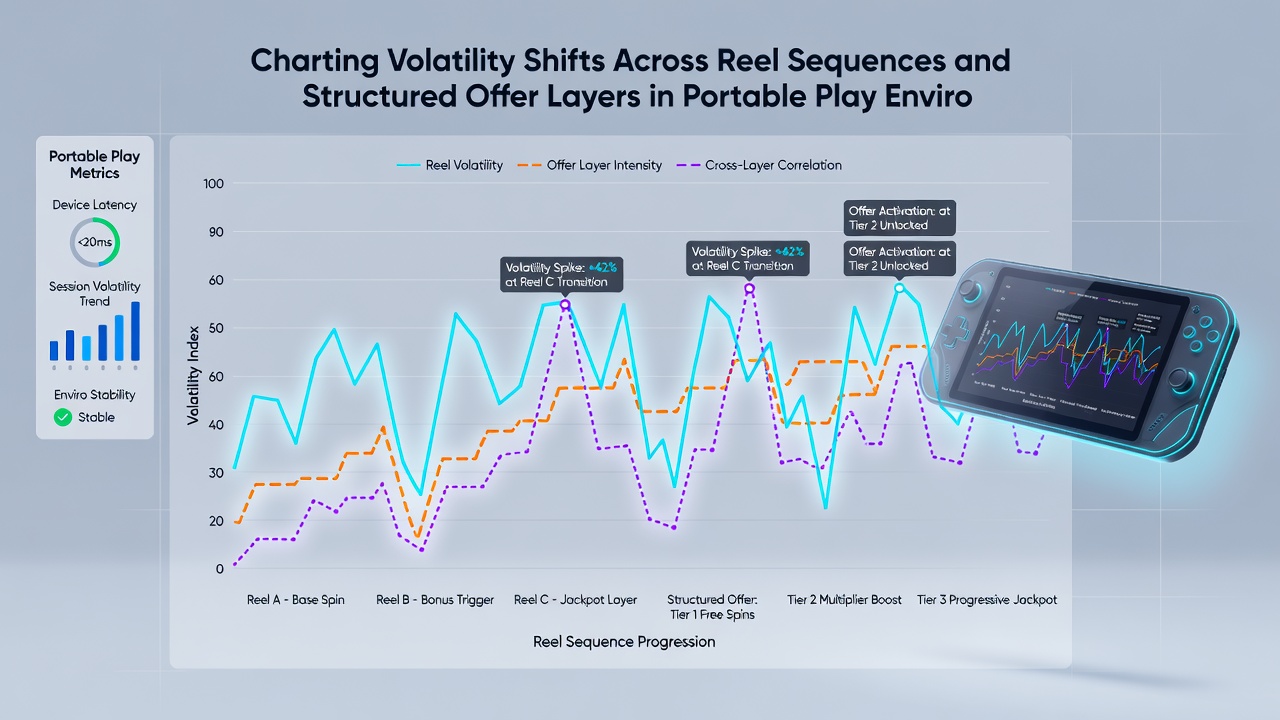
One study released by the Australian Gambling Research Centre examined how offer-layer stacking influences reel-sequence volatility across different screen orientations. The findings showed that portrait-mode sessions exhibited slightly higher variance in early spin blocks because smaller visual fields encourage faster spin rates, which in turn samples the volatility distribution more rapidly. Landscape sessions produced steadier sequences once players settled into longer play intervals. The report emphasized that these differences remain statistically significant only when structured offers remain active for more than 200 spins.
Cross-Platform Volatility Comparison Methods
Comparative analysis between portable and stationary environments requires normalization of session length and offer-layer exposure because mobile users tend to interleave shorter bursts with longer continuous runs. Academic papers published in the Journal of Gambling Studies outline normalization procedures that weight each sequence segment by its position within an offer cycle. Application of these procedures has allowed regulators in multiple regions to identify when a title's advertised volatility deviates from observed outcomes once offer layers are factored in. Industry groups such as the European Gaming and Betting Association have begun publishing template methodologies so operators can align internal charting practices with external audit requirements.
Conclusion
Charting volatility shifts across reel sequences and structured offer layers in portable play environments relies on high-resolution telemetry, standardized logging mandates, and cross-jurisdictional data sets that continue to expand through 2026. Regulatory bodies outside the United Kingdom, including those in New Jersey and several Canadian provinces, have supplied much of the empirical foundation for current models. Continued refinement of sequence-mapping techniques and offer-layer isolation methods supports more accurate calibration of mobile slot parameters across global markets.